[Mary Bange - Pilates Instructor - Houston, Texas]
Mary Bange, PhD - Pilates Instructor, Houston, Texas
Mary Bange, PhD - Pilates | Fitness | PerformancePilates and YouPilates for Sports PerformancePilates for Cancer RecoveyPilates TestimonialsContact Mary Bange Pilates
What is Pilates? History of Pilates.


What is Pilates?

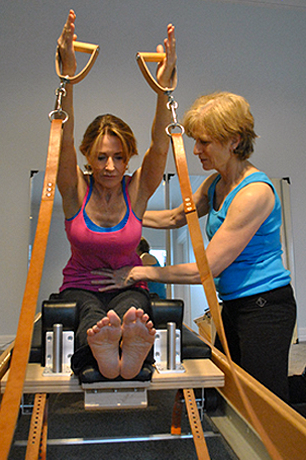
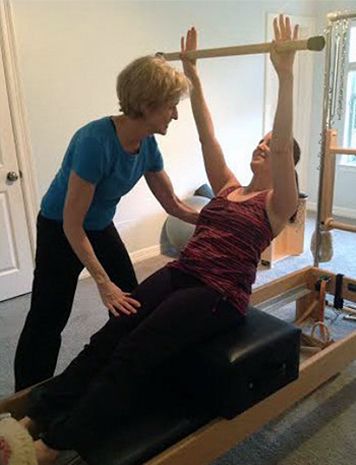
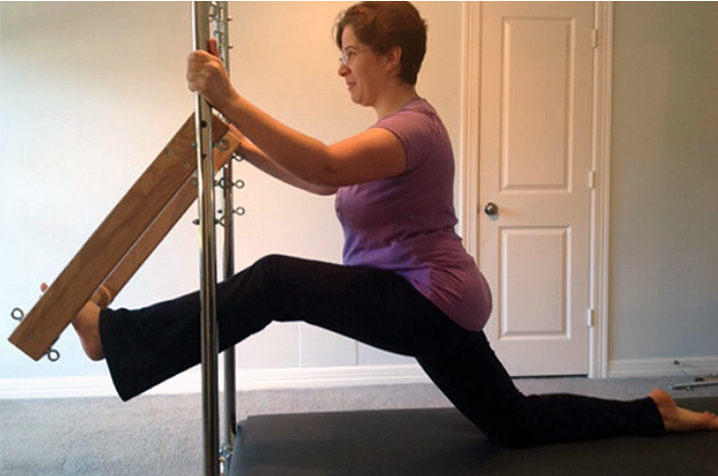
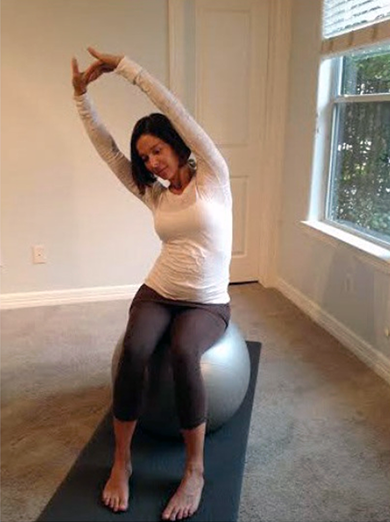
Pilates is a method of body conditioning consisting of a unique system of exercises that combine stretching and strengthening with control. Pilates teaches the body to move in a way that is natural, efficient and pain free. It strengthens and tones muscles, improves posture, and provides flexibility and balance.

Pilates History

Pilates was first developed by a German born boxer and gymnast, Joseph Pilates. Pilates began his body conditioning system in the early 1900s. Plagued by asthma and rickets as a child, Pilates' method sprang from his determination to strengthen his frail body. The Pilates Principles were created as the basis for his conditioning system. These principles include breathing, centering, control, concentration, fluidity and precision.

"A few well-designed movements, properly performed in a balanced sequence, are worth hours of doing sloppy calisthenics or forced contortion."
Joseph PilatesJoseph Pilates and the history of Pilates.

Pilates fine-tuned his method of exercising during World War I in an effort to improve the rehabilitation program needed by injured soldiers. His precise movements emphasized form as well as control to help injured soldiers regain their health by strengthening, stretching and stabilizing key muscles. Joseph Pilates set up a studio in New York City after immigrating to the United States in 1926.

Pilates Body Conditioning Exercises

The main focus of Pilates is on the core postural muscles. These muscles not only help keep the body balanced but they also support the spine. A person has to be aware of breath and the alignment of the spine as he or she works through the Pilates exercises.

Pilates conditioning focuses on seven major physical performance factors. These include posture, stability, coordination, functional strength, balance, flexibility and endurance. Although strength training is of the utmost importance, Pilates recognized that the short bulky muscles from weight training are easily injured and increase pressure on the joints and spine. Pilates realized it is just as important to stretch the muscles to build longer muscles that are more agile.

Pilates does not contain a lot of repetitious exercises that bore you to tears. You only have to repeat a few postures properly before you go on to the next movement. Why? Part of the exercise is to bring one's full attention to every movement. Similarly, exacting alignment and core training that goes beyond the superficial muscles (the six-pack) require more attention and micro-adjustments than one finds in an exercise class. In Pilates, controlled, well-aligned movement is the ticket to a deeper level of fitness, injury prevention and recovery from injury.


Mary Bange, Ph.D. spacer|spacer 713.864.2413 tel. spacer|spacer 803.240.2580 cell. spacer|spacer maryb@fastmail.fm spacer|spacer Houston TX